
𝐓𝐇𝐄 𝐔𝐍𝐒𝐏𝐎𝐊𝐄𝐍 𝐖𝐎𝐌𝐀𝐍
Author
Melissa Genevieve Dennis 🖤
𝐓𝐇𝐄 𝐔𝐍𝐒𝐏𝐎𝐊𝐄𝐍 𝐖𝐎𝐌𝐀𝐍
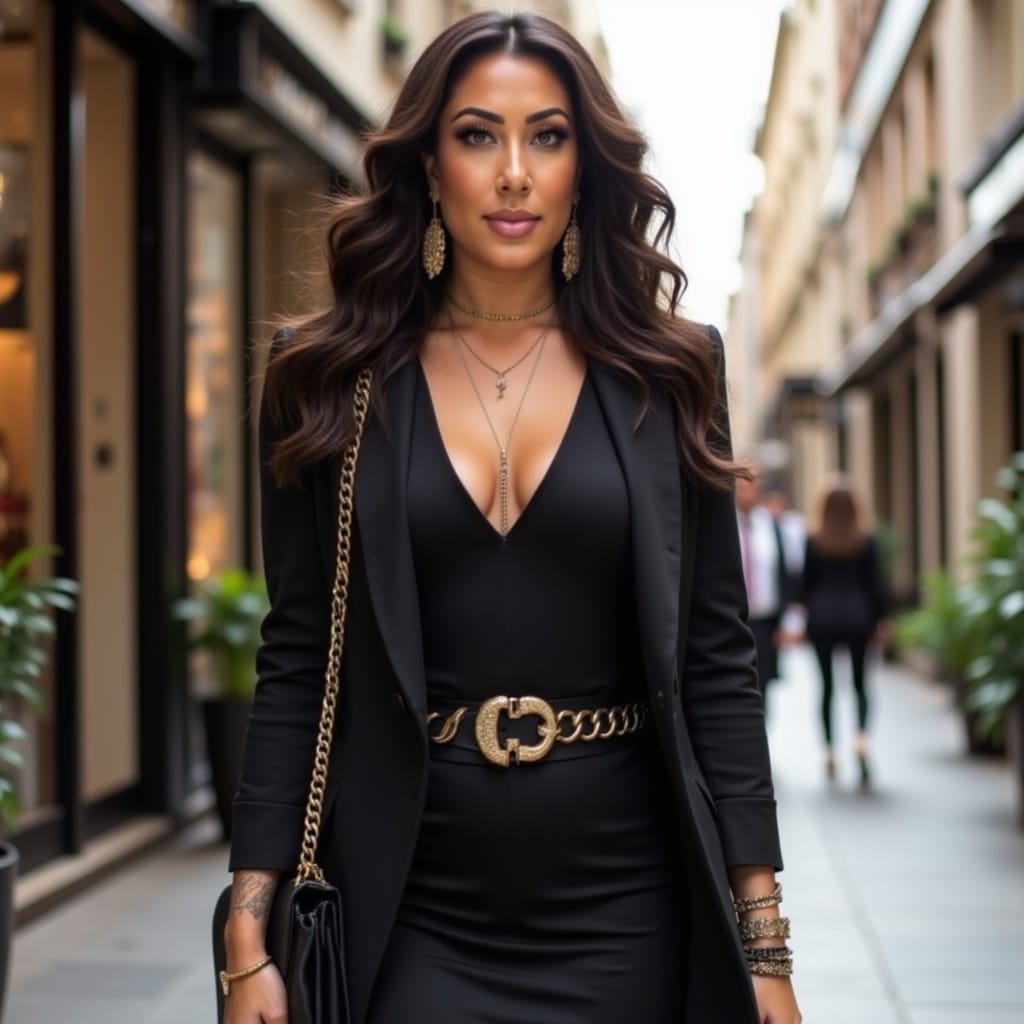
There is a woman who lives beneath language.
She is not loud. She is not performing clarity. She is not trying to be understood by the world that keeps asking her to explain herself better, soften herself more, or hurry up and decide who she is.
She is the woman who has learned to hold entire galaxies of thought, feeling, contradiction, and knowing inside her body without needing to broadcast them.
She is the Unspoken Woman.
You will not always recognise her at first. Sometimes she looks like the woman who has gone quiet. Sometimes she looks like the woman who has stepped back. Sometimes she looks like the woman who is “doing less,” saying less, showing less.
But what looks like absence is often depth.
The Unspoken Woman is not silent because she has nothing to say. She is silent because she has learned that not everything sacred survives exposure. She has learned that some truths bruise when dragged too quickly into daylight. She has learned that her inner world is not a performance stage, and her healing is not a group discussion.
She carries experiences that cannot be summarised neatly. Experiences that do not flatten into advice.
Experiences that do not translate well into inspirational quotes or tidy conclusions.
So she keeps them close.
The Unspoken Woman often feels misunderstood, not because she is unclear, but because the world is impatient. It wants coherence on demand. It wants a narrative arc. It wants a beginning, a lesson, and a triumphant ending.
But her life has not moved in straight lines.
She has loved deeply. She has trusted her intuition and then questioned it. She has been strong when it cost her softness, and soft when it required more courage than strength ever did. She has made choices from devotion, not ambition. From protection, not fear. From love, even when love complicated everything.
And there are parts of that journey she will never fully explain.
Not because she is hiding.
But because explanation would reduce it.
The Unspoken Woman knows something that takes many women years to learn:
that constant articulation can become a form of self-abandonment.
She has watched women narrate their pain in real time, hoping that being seen would finally make it hurt less. She has watched women turn their private reckonings into content, their grief into lessons, their rawness into currency.
And she chose a different path.
She chose containment.
Containment is not repression. It is reverence.
It is the ability to say, this part of me is still becoming, and to refuse to rush it into words just to soothe other people’s discomfort with ambiguity.
The Unspoken Woman does not owe the world her processing.
She understands that there is a difference between honesty and exposure, between truth and disclosure, between intimacy and accessibility. She understands that not everything that is real needs to be visible in order to be valid.
In a culture that rewards oversharing and confuses vulnerability with openness, she has become quietly radical.
She trusts her inner timing more than public approval.
She lets things settle inside her before naming them. She allows meaning to form slowly, like sediment, rather than forcing insight prematurely. She does not rush to teach what she is still integrating. She does not explain what she has not yet metabolised.
And because of this, her presence feels different.
People often sense something about her they cannot quite place. A gravity. A steadiness. A depth that does not ask for attention but commands it anyway. She speaks less, but when she does, her words land.
Not because she is more intelligent than other women, but because her words have been lived in first.
The Unspoken Woman is often mistaken for being withdrawn, disengaged, or “no longer herself.” But what is really happening is an internal reorganisation. An identity shedding. A recalibration of what matters.
She is no longer interested in being legible to everyone.
She is interested in being aligned with herself.
There are things she has lost along the way. Certainties. Versions of herself she once relied on. Futures she once imagined with confidence. And there is grief in that, even when the choice was right.
Especially when the choice was right.
But she does not rush to rebrand the loss as growth. She lets it ache where it aches. She lets it soften her rather than harden her. She lets it teach her discernment rather than cynicism.
This is why the Unspoken Woman often feels older than her years and younger than she appears. She carries wisdom without rigidity. She carries tenderness without naivety.
She has learned that power does not always look like expansion. Sometimes it looks like contraction. Like choosing fewer rooms. Fewer voices. Fewer demands.
Sometimes power looks like staying.
Staying present. Staying devoted. Staying rooted in the life she has chosen, even when it asks her to let go of other lives she could have lived.
The Unspoken Woman does not need to convince you of her depth. She knows that those who are meant to recognise her will feel it.
She is not here to be consumed.
She is not here to be explained.
She is not here to be hurried.
She is here to live truthfully, quietly if necessary, fully regardless.
And if you are reading this and something in you softened, slowed, or exhaled, it may be because you recognise her.
Not as an idea.
But as a remembering.
Loved this letter?
Share your thoughts and let me know what you’d love me to write about next 👇
💫 Click here to leave your 5 star review



Copyright © 2026 Ceo Goddess. All Rights Reserved. Privacy | Terms of Service | Contact Me